Quick answer: An inaccessible polling place can raise a claim under Title II of the Americans with Disabilities Act (ADA). Whether an individual lawsuit is available—and what it could accomplish—depends on the barrier, the responsible public entity, the requested relief and the court. A legal claim also may not solve an immediate problem casting a ballot.
This explainer covers United States federal law. State election procedures and additional protections vary. It is general legal information, not legal advice.
What makes polling-place access a civil rights issue?
Under 42 U.S.C. § 12132, a public entity cannot exclude a qualified person with a disability from its programs, deny their benefits or discriminate because of disability. State and local voting programs fall within this framework. The issue is access to the voting program, even when officials use a privately owned building as a polling location.
A locked accessible entrance, a route blocked by steps or voting equipment a voter cannot use may present different problems. The practical question is how the barrier affects that person’s opportunity to participate, and what effective access the election authority provides.
Does every building need permanent alterations?
The existing-facilities rule, 28 C.F.R. § 35.150, evaluates a public program as a whole. It does not automatically require structural changes to every existing building. Effective alternatives can include moving services to accessible locations or modifying equipment. The regulation prioritises methods that deliver services in the most integrated appropriate setting.
Its exceptions for fundamental alterations or undue financial and administrative burdens are limited. The public entity bears the burden of justification, and must consider other actions that would still provide access. “The building is old” does not by itself answer the program-access question.
Can officials simply offer a postal ballot?
The Justice Department’s guidance on voters with disabilities says absentee voting cannot replace in-person access for voters who prefer to vote at the polls. In rare circumstances, curbside voting can serve as an alternative when an accessible site cannot be identified or created, but it must offer an equally effective opportunity to vote in person. This does not mean every state offers curbside voting on request.
Equipment access matters too. For federal elections, 52 U.S.C. § 21081(a)(3) requires an accessible voting system at each polling place, including nonvisual access and the same opportunity for privacy and independence as other voters. An accessible entrance alone does not resolve an unusable ballot system.
What if the barrier happens while voting is open?
Immediate access and later enforcement are separate concerns. A voter can explain the barrier to the polling-place supervisor or local election office and ask what accessible arrangement is available. Location rules, voting hours and ballot procedures depend on the state; a different site should not be assumed to accept the voter’s ballot.
For a record of the incident, useful details include the location, date, time, specific obstacle, accommodation requested, officials’ responses and whether voting was ultimately possible. Preserve messages and contemporaneous notes. Photography and recording rules at voting locations vary; documenting an obstacle must respect applicable restrictions and other voters’ privacy.
What can a complaint or lawsuit achieve?
42 U.S.C. § 12133 supplies Title II’s enforcement framework. It does not establish an automatic payment for encountering an access barrier. The proper defendant, standing, available remedies, immunity questions and filing deadlines require jurisdiction-specific legal assessment. A request for future access and a claim for monetary damages raise different issues.
A separate route is an ADA complaint to the Justice Department. The department may refer, mediate or investigate a complaint, but cannot investigate every report. This process should not be assumed to provide an immediate election-day response or preserve a court deadline. Its voting-rights guidance also lists the Voting Section’s reporting contacts, including 800-253-3931.
A qualified attorney or local disability-rights legal organisation can assess urgent relief, deadlines and state protections using the actual facts. Neither a barrier nor a complaint establishes that a lawsuit will succeed.
Disclaimer: Informational only; no attorney-client relationship is created. This article does not recommend filing a lawsuit or replace advice from an attorney licensed in the relevant jurisdiction.
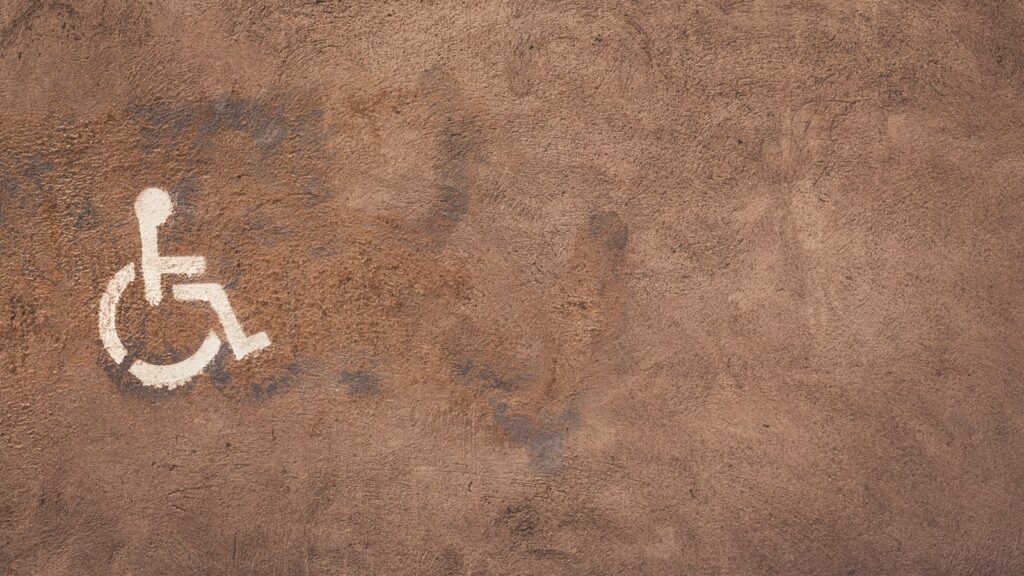
Featured image: Tim Mossholder / Unsplash. Illustrative accessibility symbol; not a photograph of a polling location.