Quick answer: An inaccessible hotel pool can raise a claim under Title III of the Americans with Disabilities Act (ADA). Whether a particular guest can bring a successful lawsuit depends on the access barrier, the hotel’s obligations and the requirements for bringing a claim. A missing pool lift does not automatically establish a violation or a right to compensation.
This explainer covers United States federal law for privately operated hotels serving the public. State protections and court procedures vary. It is general legal information, not legal advice.
Does an older hotel have to make its pool accessible?
The Justice Department’s questions and answers on existing pools distinguish new construction and alterations from existing facilities. Newly constructed or altered pools are subject to applicable accessibility standards. At an existing hotel pool, the duty to remove barriers depends on whether doing so is readily achievable: possible without much difficulty or expense.
That assessment considers the work and cost, the business’s resources and its relationship to a parent entity. The age of the pool alone does not settle the question. Nor does the absence of a lift necessarily mean there is no compliant entry: a sloped entry may provide access. The applicable requirements depend on the pool and its construction or alteration history.
This article’s hotel framework should not be applied unchanged to a municipal pool. Government swimming programs fall under Title II, with a different program-accessibility analysis.
What if the lift exists but guests cannot use it?
Equipment on a checklist is different from equipment available to a swimmer. The Justice Department’s accessible-pools guidance explains that accessible features must work while the pool is open. Staff training, battery charging and keeping equipment available are part of maintaining access.
There is an important qualification. 28 C.F.R. § 36.211 allows isolated or temporary interruptions caused by maintenance or repairs. A short repair interruption and a lift routinely left unusable therefore raise different factual questions. An “out of order” sign alone does not explain how long the problem has lasted or what is being done.
What information helps explain the barrier?
A useful factual record can include the reservation, accessibility descriptions, dates and times, the obstacle encountered, requests for assistance and staff responses. Notes about whether the pool remained open to other guests can help distinguish a general closure from an access problem.
Messages and photographs taken lawfully can preserve details without drawing conclusions about technical compliance. Respect other guests’ privacy and pool photography rules. Trying to operate unfamiliar equipment or attempting an unsafe transfer is not necessary to document that access was unavailable.
Would a lawsuit mean money damages?
A private Title III lawsuit seeks preventive relief, such as an order to remove a barrier, under 28 C.F.R. § 36.501. It does not provide a private damages award for a disappointing stay. 42 U.S.C. § 12188 separately addresses Justice Department enforcement, where different remedies may be available.
State-law claims may have different remedies and requirements. The correct defendant, standing to seek future relief, deadlines and any state procedures need assessment by an attorney licensed in the relevant jurisdiction. A past access problem does not by itself resolve those questions.
Is there a complaint route?
The Justice Department accepts ADA complaints about public-facing businesses, including hotels. It may refer a report, offer mediation or investigate; it cannot investigate every complaint. A report does not guarantee a lawsuit, compensation or an immediate repair. It should not be assumed to preserve a court filing deadline.
A local disability-rights organisation or qualified attorney can explain the options using the hotel’s location and actual facts.
Disclaimer: Informational only; no attorney-client relationship is created. This article does not recommend filing a lawsuit or replace advice from an attorney licensed in the relevant jurisdiction.
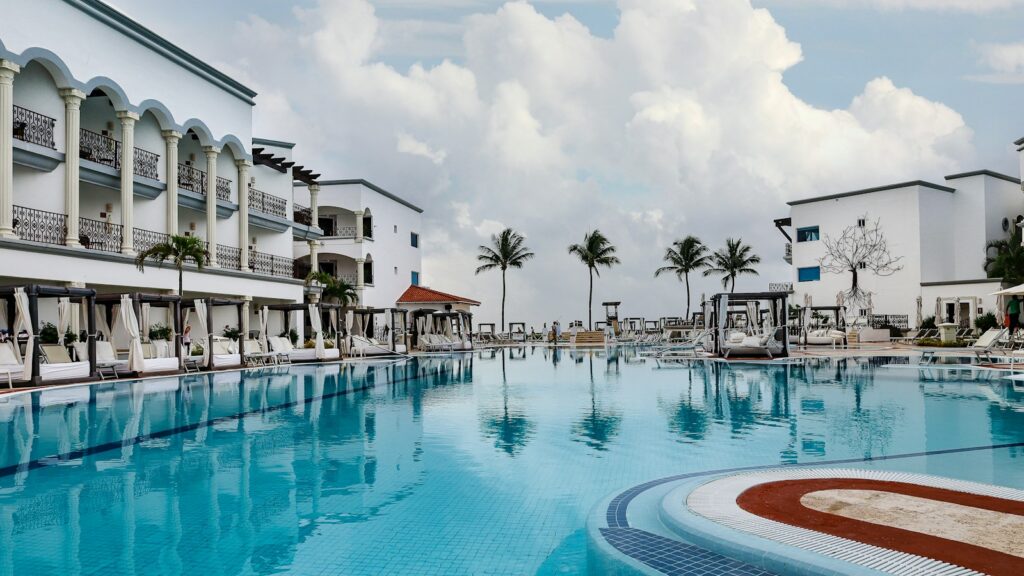
Featured image: Rosemary Media / Unsplash, used under the Unsplash License. Illustrative resort pool; no allegation about the pictured property.